Reflecting on the reasons I became a photographer. I saw the picture working better than the word to get the story out. Avoiding having the reader create the image in their mind. (Something the reporters saw as supperior to the photo)
I wanted to call attentionand motivate readers to solve problems, appreciate successes and good times. I liked the challenge of getting a weather picture quickly and make the deadline.
It occurs how different I was as a photographer:
Paul Moseley wa a great photographer, but he liked simply being at important events. Always taking a selfy on the sidelines, or the photo shooting down of him and his wife on vacation standing at four corners,
David Burnet is having exhibits showing photos of famous people he photographed.
Eric Meola had a unique way to expose images with bold colors and graphic design. Making his photos of tornadoes stand out over all the snapshots published on Facebook.
I saw working for a newspaper as getting the news out, but the problem was that you never had time to really get deeply into the story. I felt to grow as a photojournalist I needed to have a "pet" project to work on in my spare time. So with lots of free time in San Francisco I started covering the native americans in the city. Contrast old culture with new culture.
In Philly I tried showing mass transportation versus the automobile and then started covering the local residents in South Philly protesting the Federal governments public housing. This protest had been going on for sixty years blocking a high rise apartment building. In that time the government realized it was a a bad idea but didn't want to give up. They had requisitioned the property and won court cases. Finally building separate townhouses for helping families get back on their feet.
My cases always need words to tell the whole story.
Working on the Postal Project it again is local to do along with other things. Started out thinking of only doing the Fort Worth Post Office, but it was actually the exception with under the table funding to make it stand out. Corruption? Not something to show off.
So I started searching out all the old post offices. Email versus postal, snail mail. Show how the government run postal system is important. Show how government tried to put on a good face in the community by building rugged (no wood) buildings to insure the mail got to the recipient. As times change these monuments have become "historic landmarks."
Some have historic works of art, murals, some are banks, some are visitor centers, libraries, restaurants or might have been taken over as Federal court houses as the Post Office Department evolved into the United States Postal Service (USPS). No longer in the center of down the new postoffices were in the industrial parks, handling mail via truck and airlines, smaller cookie cutter postoffices spread out around the city.
Is documenting the old main pre internet post office of any interest?
Sunday, July 14, 2019

Wednesday, July 3, 2019
Real American Story---Being an American
Robert Reich, former Pres Clinton Sec'y of Labor, is posting videos expressing his liberal views.
Had to take notes on his comparison between the countries founders and Pres. Trump, calling it capitalism versus cronyism. Where he compares to dictators who concentrate wealth and creates monopoly.
Republic promotes Hope (Democrats) versus Fear (Republicsan, NRP)
Hope means triumphant, like Horatio Alger and the individual. It is good to volunteer in the community, with neighbors and friends. Goes back to Puritans and helping non-profits.
Promote FDR the Four Essentials of government. Illustraited by Norman Rothwell showing Turkey dinner (Want), parents tucking in child (Freedom from Fear. security, no guns in illustration) mixed one standing up (Freedom of Speech, and group praying (Worship). That was what FDR used for State of Union address during WWII.
For the Fear, there is an enemy at the gate. Have an enemy and need security. Pushing Rot at the top Reagan fought Federal govt.
See more Reich on You Tube.
Had to take notes on his comparison between the countries founders and Pres. Trump, calling it capitalism versus cronyism. Where he compares to dictators who concentrate wealth and creates monopoly.
Republic promotes Hope (Democrats) versus Fear (Republicsan, NRP)
Hope means triumphant, like Horatio Alger and the individual. It is good to volunteer in the community, with neighbors and friends. Goes back to Puritans and helping non-profits.
Promote FDR the Four Essentials of government. Illustraited by Norman Rothwell showing Turkey dinner (Want), parents tucking in child (Freedom from Fear. security, no guns in illustration) mixed one standing up (Freedom of Speech, and group praying (Worship). That was what FDR used for State of Union address during WWII.
For the Fear, there is an enemy at the gate. Have an enemy and need security. Pushing Rot at the top Reagan fought Federal govt.
See more Reich on You Tube.
Wednesday, December 26, 2018
How the rich get richer – predicting December 2018
NoNow as the year ends we see start seeing a hint of the effects. Too much easy money. Solution simply to go back to where they started in 1971.
How or why did this have to happen? What will be the real effect? Worldwide Depression?
Wednesday, August 29, 2018
Do newspapers preserve memories?
As a news photographer you were thinking about making the deadline for the next days newspaper. Reporters have complained about how their articles were only read on the day of publication and after that the paper was only used to "wrap fish with."
Maybe for words,
The photograph is more objective, capturing a unique moment and enables the viewer to see: the people, study their dress, look at faces, environment, etc. This then brings back their own memories, or maybe helps understand the life of parents during WWII. Better understand articles reflecting on historic moments. See grandparents alive and smiling.
I was talking to a friend show commented on how she helped friends at weddings by photographing all the guests. Saying how the photo of the couple getting married was nice, but that couple would like to see and remember who came to the wedding. Interesting, who came to your wedding?
www.jimdomke.com

Maybe for words,
The photograph is more objective, capturing a unique moment and enables the viewer to see: the people, study their dress, look at faces, environment, etc. This then brings back their own memories, or maybe helps understand the life of parents during WWII. Better understand articles reflecting on historic moments. See grandparents alive and smiling.
I was talking to a friend show commented on how she helped friends at weddings by photographing all the guests. Saying how the photo of the couple getting married was nice, but that couple would like to see and remember who came to the wedding. Interesting, who came to your wedding?
www.jimdomke.com

Saturday, August 25, 2018
Once upon a time I was a newsphotographer
Reading a Facebook post from an old colleague who took a newspaper buy-out, he posted how he liked all the events he has witnessed first hand. it started me thinking of my favorite moments at the various newspapers where I have worked. I always think about the successful photo that resulted.
For example, I remember interning at Newsday and getting to go to a peace concert at Shea stadium. Can't remember what bands were playing, it was a year after Woodstock, but it was the audience that caught my attention. The photo of the fans cheering has stayed in my portfolio.

A summer internship at the Aspen Times was a kick, got to find all my own stories. No assignments! I loved the new offset press and having all the space to fill with picture pages. Did a page on a rodeo, a sports car race, festivals, etc.
The one week "guest photographer" spring break for Chicago weeklies was fun in freezing weather showing a mail man who made friends with dogs.
On my first day at the San Francisco Examiner, the photo chief Bill Nichols assigned me to travel around with Fran Ortiz. Fran had freelanced for LIFE magazine but now worked full-time as a staff photog. We were heading to an assignment and he got a page on his car radio to head to Marin county where police were getting resistance and calling in support as they tried to confiscate a boat. I happened to have my motorized Nikon F with a 180mm lens, and Fran had his trusty Leica.

We got there with the boat owner on the deck and the police trying tie down the boat. The owner had a knife to cut the rope. I immediately stopped and started shooting with my long lens. The photo made the front page. From then on I've always had a photo make a section front page on my first day!
But is the returning P.O.W. photo taken at Travis AFB on a Saturday for the Examiner. It gets published as an example of being at the right place at the right time, well not the right time, my shot is a fraction of a second off the AP photog Sal Veder's shot.
 As a staff photographer at The Philadelphia Inquirer my favorite moment was getting assigned to take a helicopter from Philly to NYC and come back with a photo. Photo of what? It was the power blackout in New York, no television or radio coverage. It was a front page story and the paper needed a photo. Photo Director Gary Haynes thought maybe an empty Times Square without electricity? But when I got there at 2 p.m. the shadows were terrible and you couldn't really see the lights were out. How could as aerial show no electricity? We had to go back the pilot didn't want to run out of gas, but there was some smoke. I told him to go past it as we circled around to head back.
Before we got to where the smoke was coming from we passed a a warehouse district and saw the picture. Looting! Seeing the resulting photo surprised the newspaper. They wouldn't run it until they could verify it. Getting through to the police was a challenge. Could they do it? I couldn't believe they'd hold the photo until the police verified there was looting going on. Nobody outside of New York knew about it, or believed it. Was this widespread?
At the Fort Worth Star-Telegram I started as a photo editor, but with the digital imaging being an editor was more like simply being a copy-boy, linking images with stories. So when I got to get back to being a news photographer my first assignment was to cover a high school class getting a lesson on ageing. They felt the kids needed to understand how older folks can't hear, see or breath as well as they did, and stuffing cotton in the hear, breathing threw a straw made them feel being old. Great photo and it made the front of the metro section.
 But the best memory as a photog at the Star-Telegram was one Sunday when I had to do the work of two photogs. One staffer had called in sick, so I needed to go his assignments too. Driving around for three assignments, I also picked up a great "weather art" photo of two guys fishing on a raft in the middle of a corporate center reflective pool.
Getting five pictures published the next day, made my day.
For example, I remember interning at Newsday and getting to go to a peace concert at Shea stadium. Can't remember what bands were playing, it was a year after Woodstock, but it was the audience that caught my attention. The photo of the fans cheering has stayed in my portfolio.

A summer internship at the Aspen Times was a kick, got to find all my own stories. No assignments! I loved the new offset press and having all the space to fill with picture pages. Did a page on a rodeo, a sports car race, festivals, etc.
The one week "guest photographer" spring break for Chicago weeklies was fun in freezing weather showing a mail man who made friends with dogs.
On my first day at the San Francisco Examiner, the photo chief Bill Nichols assigned me to travel around with Fran Ortiz. Fran had freelanced for LIFE magazine but now worked full-time as a staff photog. We were heading to an assignment and he got a page on his car radio to head to Marin county where police were getting resistance and calling in support as they tried to confiscate a boat. I happened to have my motorized Nikon F with a 180mm lens, and Fran had his trusty Leica.

We got there with the boat owner on the deck and the police trying tie down the boat. The owner had a knife to cut the rope. I immediately stopped and started shooting with my long lens. The photo made the front page. From then on I've always had a photo make a section front page on my first day!
But is the returning P.O.W. photo taken at Travis AFB on a Saturday for the Examiner. It gets published as an example of being at the right place at the right time, well not the right time, my shot is a fraction of a second off the AP photog Sal Veder's shot.
 As a staff photographer at The Philadelphia Inquirer my favorite moment was getting assigned to take a helicopter from Philly to NYC and come back with a photo. Photo of what? It was the power blackout in New York, no television or radio coverage. It was a front page story and the paper needed a photo. Photo Director Gary Haynes thought maybe an empty Times Square without electricity? But when I got there at 2 p.m. the shadows were terrible and you couldn't really see the lights were out. How could as aerial show no electricity? We had to go back the pilot didn't want to run out of gas, but there was some smoke. I told him to go past it as we circled around to head back.
Before we got to where the smoke was coming from we passed a a warehouse district and saw the picture. Looting! Seeing the resulting photo surprised the newspaper. They wouldn't run it until they could verify it. Getting through to the police was a challenge. Could they do it? I couldn't believe they'd hold the photo until the police verified there was looting going on. Nobody outside of New York knew about it, or believed it. Was this widespread?
At the Fort Worth Star-Telegram I started as a photo editor, but with the digital imaging being an editor was more like simply being a copy-boy, linking images with stories. So when I got to get back to being a news photographer my first assignment was to cover a high school class getting a lesson on ageing. They felt the kids needed to understand how older folks can't hear, see or breath as well as they did, and stuffing cotton in the hear, breathing threw a straw made them feel being old. Great photo and it made the front of the metro section.

Getting five pictures published the next day, made my day.
# # #
Friday, July 13, 2018
Photo story layout of the furture?
I also thought the photo story started with a lead photo, it would tell the overall story. Senator walking up steps to congress, then smaller photos showing him at work and exhausted. A picture story.
On the internet we can now have a lead photo and insert the secondary photos inside the photo. Click a button and you get another photo along with details telling about it. Designed for selling product, but it can also be a great way to tell the story for journalists!
On the internet we can now have a lead photo and insert the secondary photos inside the photo. Click a button and you get another photo along with details telling about it. Designed for selling product, but it can also be a great way to tell the story for journalists!
 |
| Check out the big picture link to ThingLink. |
Saturday, June 30, 2018
Remember when the mailman walked door to door?
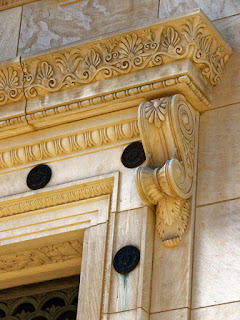
Starting a new project documenting the great post offices, built in towns across the country. They were the most important building in the community. When the United States was founded they immediately picked Benjamin Franklin to be the postmaster/ The post office was how the government got the news about invasion and disaster.
The buildings often housed both post office and government courthouse along with other offices. These multi-functional buildings were unique and have changed over the years. Photos are needed to show their grandeur and how they are used today. Some are hotels, restaurants, libraries, school buildings and more.
Researching about the post office reminded me how during the Spring Break my senior year at the University of Missouri, I drove to Chicago to be a guest photographer for a suburban chain of weeklies. One of the stories was a picture page on a mailman who instead of being chased or attacked by dogs along his route, the pets loved to follow him and protect him.


The buildings often housed both post office and government courthouse along with other offices. These multi-functional buildings were unique and have changed over the years. Photos are needed to show their grandeur and how they are used today. Some are hotels, restaurants, libraries, school buildings and more.
Researching about the post office reminded me how during the Spring Break my senior year at the University of Missouri, I drove to Chicago to be a guest photographer for a suburban chain of weeklies. One of the stories was a picture page on a mailman who instead of being chased or attacked by dogs along his route, the pets loved to follow him and protect him.


Subscribe to:
Posts (Atom)